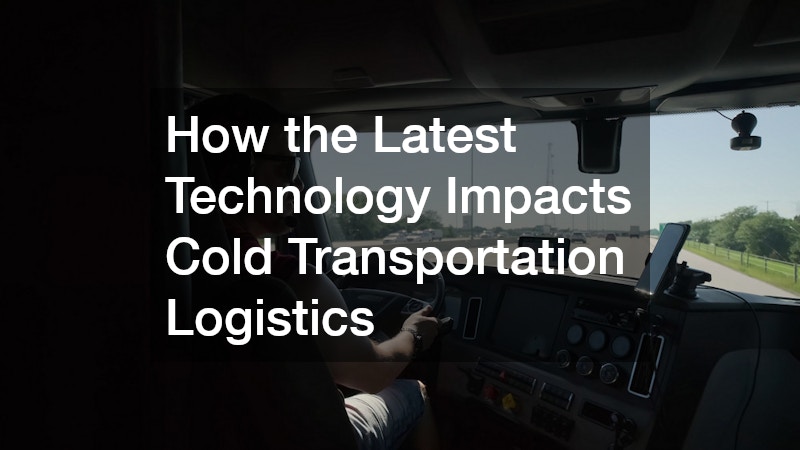

Technology is increasingly transforming cold transportation logistics, enhancing efficiency and reliability across the supply chain. As global demands rise, the integration of advanced technological solutions becomes pivotal to managing cold chain operations effectively.
This article explores the major technological advances shaping cold transportation logistics. We will delve into how these advancements impact refrigeration technologies, automation, big data analytics, and artificial intelligence, revolutionizing logistics management.
The following sections will provide a detailed perspective on how these technologies are leveraged to address industry challenges and optimize performance. In an era of rapid technological evolution, understanding these trends is crucial for stakeholders in the logistics industry.
1. What Are the Latest Technological Advancements in Cold Transportation Logistics?
1.1 IoT and Smart Sensor Technologies
The Internet of Things (IoT) and smart sensor technologies are crucial in monitoring temperature and conditions within cold transportation units. These technologies provide real-time data, ensuring that perishable goods are transported at optimal temperatures.
By connecting devices across the transportation network, IoT enables more precise tracking and management of inventories. This connectivity reduces product loss and enhances logistic efficiencies.
The integration of smart sensors allows for immediate responsiveness to potential breaches in storage conditions. Consequently, the quality and safety of goods are maintained throughout transit, supporting industry standards.
1.2 Blockchain for Transparency and Security
Blockchain technology offers a robust framework for ensuring transparency and security in cold chain logistics. It provides an immutable ledger that records every transaction, enhancing accountability and trust among stakeholders.
Implementing blockchain in logistics allows for secure verification of product origin, handling, and destination. This transparency is essential in industries where the integrity of information is paramount, such as pharmaceuticals and food.
Moreover, smart contracts facilitated by blockchain can automate transaction processes, reducing paperwork and the risk of human error. This efficiency contributes to smoother and more reliable logistics operations.
2. How Do Advances in Refrigeration Technology Improve Efficiency?
2.1 Energy-Efficient Systems
The development of energy-efficient refrigeration systems is pivotal in reducing operational costs in cold transportation. These systems utilize cutting-edge technologies to conserve energy while maintaining effective cooling performance.
Such systems minimize energy wastage by optimizing compressor operation and using advanced insulating materials. This energy optimization directly translates into cost savings and reduced carbon footprint.
By investing in energy-efficient solutions, companies can adhere to stricter environmental regulations while ensuring that their logistics operations remain cost-effective and sustainable.
2.2 Sustainable Refrigeration Solutions
Sustainable refrigeration solutions aim to mitigate the environmental impact of traditional cooling methods. These solutions include using natural refrigerants and renewable energy sources, significantly reducing greenhouse gas emissions.
Innovations such as solar-assisted refrigeration units have made it possible to harness renewable energy effectively. This approach not only ensures sustainability but also offers a stable power supply in regions with limited infrastructure.
Adopting sustainable refrigeration models is not only environmentally responsible but also commercially prudent as consumers become increasingly environmentally conscious. This shift towards sustainability is now a critical component of corporate social responsibility.
3. What Role Does Automation Play in Cold Transportation Logistics?
3.1 Automated Warehousing Solutions
Automated warehousing solutions are revolutionizing cold transportation logistics by improving storage efficiency and reducing human intervention. These systems use robotics and automated carousels to handle and manage inventory.
Incorporating automation in warehouses decreases the likelihood of errors, thereby ensuring the integrity of the cold chain. Automated systems can operate 24/7, enhancing the speed and reliability of logistics operations.
Such warehousing solutions are particularly beneficial in high-demand scenarios, allowing companies to scale operations without proportional increases in personnel costs. This scalability is essential for maintaining a competitive advantage.
3.2 Robotics and Autonomous Vehicles
The use of robotics and autonomous vehicles has ushered in a new era of precision and efficiency in logistics. These technologies enable automated loading, unloading, and transportation of goods, minimizing handling time and errors.
Robots equipped with sensors and AI can navigate warehouses and transport units with high accuracy. This level of precision in movement significantly reduces delays and enhances productivity.
The deployment of autonomous vehicles is expected to increase in the coming years, driven by the need for cost-efficient and safe delivery solutions. This technological shift will likely redefine logistics strategies and operational procedures.
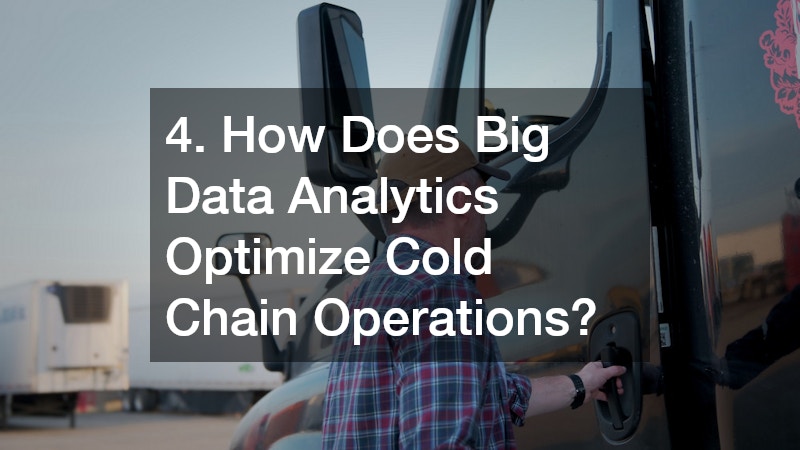
4. How Does Big Data Analytics Optimize Cold Chain Operations?
4.1 Predictive Analytics for Demand Forecasting
Big data analytics empowers logistics companies with the ability to forecast demand and adjust operations accordingly. By analyzing trends and patterns, companies can make informed decisions about inventory levels and distribution routes.
This predictive capability significantly reduces the incidence of overstock and spoilage, common challenges in cold chain logistics. Effective demand forecasting aligns production with market needs, minimizing waste.
The integration of big data analytics into logistics is facilitated by advances in computational power and algorithm development. This integration is expected to deliver higher efficiency and cost savings to the industry.
4.2 Real-Time Monitoring and Data Utilization
Real-time monitoring systems powered by big data provide a comprehensive view of cold chain operations. This visibility enables proactive management of potential disruptions and ensures that the supply chain remains uninterrupted.
Utilizing real-time data, companies can swiftly respond to anomalies in logistics conditions. This agility is crucial in maintaining the quality and safety of perishable goods.
Furthermore, these technologies facilitate data-driven decision-making, allowing companies to optimize routes, inventory management, and resource allocation with unprecedented accuracy.